GEAR
Best Drip Coffee Makers (2026): SCA-Certified Picks and What to Look For
The best drip coffee makers, from the Technivorm Moccamaster to budget programmable picks — plus why brew temperature and SCA certification matter.
By Origin & Cup Editors · Published October 14, 2026 · 4 min read
Disclosure: We may earn a commission when you buy through links on this page, at no extra cost to you. As an Amazon Associate, Origin & Cup earns from qualifying purchases. How we make money.
Our top picks at a glance
- Check price
Best overall (and longest-lasting)
1. Technivorm Moccamaster KBGV Select - Check price
Best value SCA-certified brewer
2. OXO Brew 8-Cup Coffee Maker - Check price
Best for tinkerers
3. Breville Precision Brewer - Check price
Best budget programmable
4. Cuisinart PerfecTemp 14-Cup (DCC-3200)
 Free calculatorCoffee to Water Ratio Calculator
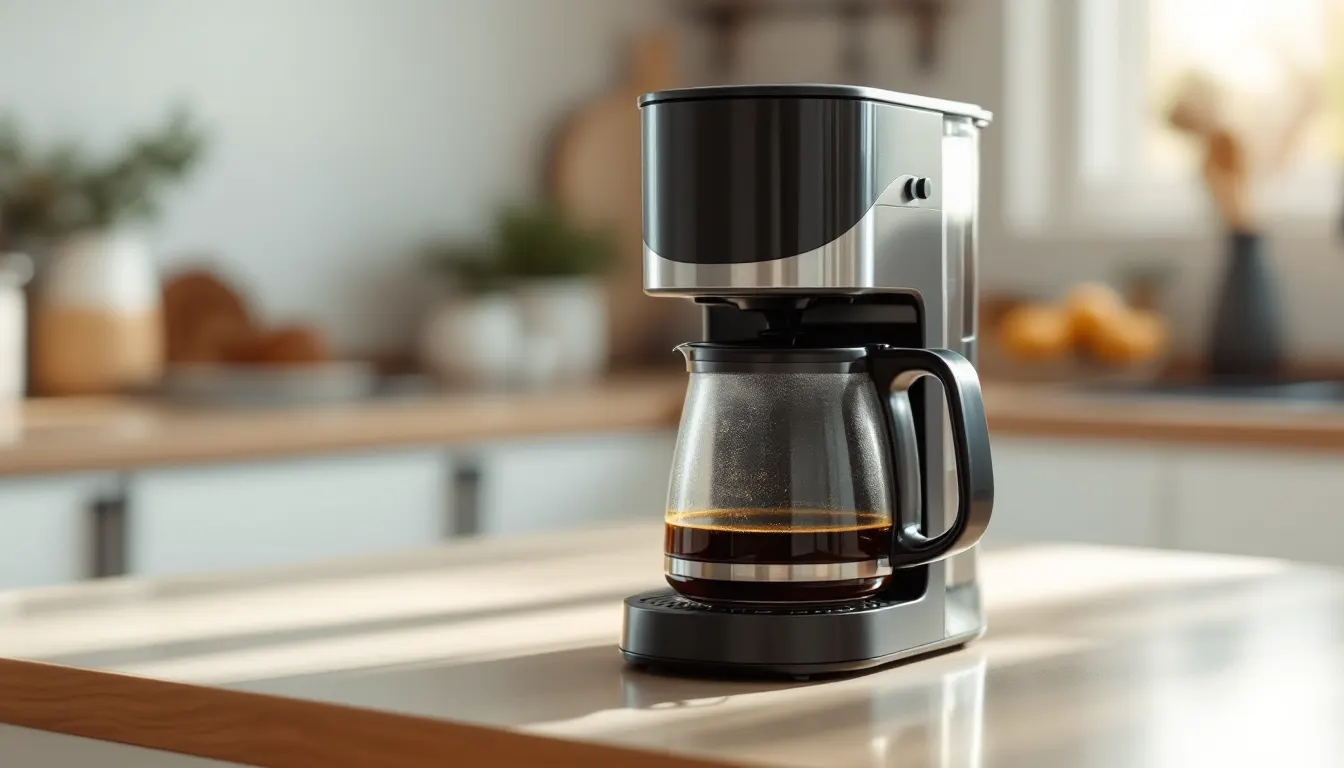
For most people, the best drip coffee maker is one that heats water properly and wets the grounds evenly — that’s what separates great drip coffee from the flat, bitter kind. The Technivorm Moccamaster KBGV Select is the long-lasting benchmark. The OXO Brew 8-Cup gives you certified brewing performance and a thermal carafe for much less. The Breville Precision Brewer is for people who like to tweak, and the Cuisinart DCC-3200 is a solid budget programmable machine.
How we chose: We have not tested these machines hands-on. We prioritized machines certified by the Specialty Coffee Association (SCA), which checks brew temperature, brew time and the strength of the finished coffee, then looked at carafe type, capacity, programmability and long-term owner feedback. We’ll update this guide if we test any of them ourselves.
Quick picks
| Coffee maker | Best for | SCA-certified | Carafe |
|---|---|---|---|
| Technivorm Moccamaster KBGV Select | Overall, longevity | Yes | Glass + hot plate |
| OXO Brew 8-Cup | Value | Yes | Thermal |
| Breville Precision Brewer | Tinkerers | Yes (Gold mode) | Glass or thermal |
| Cuisinart PerfecTemp DCC-3200 | Budget, big batches | No | Glass + hot plate |
What actually matters in a drip coffee maker
1. Brewing temperature
Coffee extracts best with water around 195–205°F (90–96°C). Many cheap machines never get the water that hot, which leaves coffee sour and weak no matter how much you use. Reaching temperature quickly — and holding it through the whole brew — is the single biggest quality factor.
2. Even water distribution
If water lands in one spot, part of the coffee over-extracts (bitter) while the rest under-extracts (sour). Good machines use a wide showerhead or multiple outlets to wet the whole bed evenly.
3. Brew time
A full pot should finish in roughly 4–8 minutes. Much longer and coffee turns bitter; much shorter and it’s thin.
4. SCA certification
The Specialty Coffee Association runs a certification program for home brewers. Certified machines have been checked for brewing temperature, brew time and the strength and extraction of the coffee they make. It’s the easiest shortcut to a machine that brews properly.
5. Carafe: thermal vs. glass
Thermal carafes keep coffee hot for hours without a hot plate. Glass carafes sit on a hot plate, which keeps coffee hot but slowly “cooks” it — fine for 30 minutes, noticeably bitter after an hour or two.
6. Features you might want
A programmable timer, a small-batch setting (so 2–4 cups don’t brew too fast and weak), a bloom or pre-infusion stage, and a removable water tank.
The best drip coffee makers
Best overall (and longest-lasting)
1. Technivorm Moccamaster KBGV Select
A simple, mostly manual machine built to do one thing very well: heat water to proper brewing temperature quickly and spread it evenly over the grounds. It's SCA-certified, assembled by hand in the Netherlands, and known for lasting many years, with replaceable parts.
- Capacity
- 40 oz (1.25 L)
- Carafe
- Glass, with hot plate
- Certification
- SCA Certified Home Brewer
- Warranty
- 5 years (US)
What stands out
- Reaches proper brew temperature consistently
- Half-batch setting for smaller pots
- Durable, repairable design
Trade-offs
- Expensive for a drip machine
- No timer or programming
- Hot plate can stew coffee if left on for long
Best value SCA-certified brewer
2. OXO Brew 8-Cup Coffee Maker
An SCA-certified machine with a simple one-dial interface that adjusts to the amount of coffee you're making, and a double-walled thermal carafe that keeps coffee hot without a hot plate.
- Capacity
- 8 cups
- Carafe
- Thermal (stainless, double-wall)
- Certification
- SCA Certified Home Brewer
What stands out
- Certified brewing performance for much less than premium brewers
- Thermal carafe — no burnt hot-plate taste
- Very simple to use
Trade-offs
- Smaller capacity than 12–14 cup machines
- Thermal carafes need hand washing and drying
Best for tinkerers
3. Breville Precision Brewer
A drip machine that behaves more like a pour over setup. Its SCA-certified 'Gold' mode follows the SCA brewing standard, and a custom mode lets you adjust temperature, bloom time and flow rate. It accepts flat-bottom filters and comes with an adapter for cone filters.
- Capacity
- Up to 12 cups
- Carafe
- Glass or thermal (by model)
- Certification
- SCA Certified (Gold mode)
- Adjustments
- Temperature, bloom, flow rate
What stands out
- Adjustable temperature and bloom
- Also brews single cups through a cone adapter
- Programmable
Trade-offs
- More settings than most people need
- Larger footprint and higher price
Best budget programmable
4. Cuisinart PerfecTemp 14-Cup (DCC-3200)
A widely available, affordable programmable brewer for big households. You get a 24-hour timer, a bold-strength setting, a small-batch (1–4 cup) setting and an adjustable hot plate. It isn't SCA-certified, so expect less precise brewing than the picks above.
- Capacity
- 14 cups
- Carafe
- Glass, adjustable hot plate
- Programming
- 24-hour timer, bold setting, 1–4 cup mode
What stands out
- Low price for a large, programmable machine
- Wake up to fresh coffee
- Easy to find replacement carafes
Trade-offs
- Not SCA-certified
- Hot plate can make coffee taste stewed over time
How to make better drip coffee with any machine
The machine is only half of it. These habits make a bigger difference than an upgrade:
- Use the right ratio. Start around 1:17 — about 55–60 g of coffee per liter of water — and adjust to taste. Plug your carafe size into the coffee ratio calculator to get exact grams.
- Grind fresh, medium. Like coarse sand. A burr grinder gives a more even grind than a blade grinder.
- Weigh instead of scooping. Scoops vary with roast and grind. A $15–25 kitchen scale makes every pot consistent.
- Use good water. If your tap water tastes off, so will your coffee. A simple filter pitcher helps.
- Rinse paper filters with hot water before brewing to remove any papery taste.
- Descale regularly. Mineral buildup slows the machine and lowers brewing temperature. Follow the manual — typically every one to three months, depending on your water.
- Don’t leave coffee on the hot plate. Transfer it to a thermal carafe or insulated mug if you won’t drink it within half an hour.
How much coffee per pot?
| Water | Coffee at 1:17 | Coffee at 1:15 (stronger) |
|---|---|---|
| 20 oz (about 590 ml) | 35 g | 39 g |
| 40 oz (about 1.18 L) | 70 g | 79 g |
| 60 oz (about 1.77 L) | 104 g | 118 g |
Remember that coffee-maker “cups” are usually 5 or 6 fl oz, not 8 — so a “12-cup” pot holds about 60 oz.
Drip machine or something else?
A good drip machine is the easiest way to make several cups of genuinely good coffee with almost no effort. If you mostly make one cup at a time, a pour over cone is cheaper and just as good. If you drink lattes, look at our home espresso machine guide instead. And if you want rich, heavy-bodied coffee with zero electronics, a French press does the job — here’s the French press ratio guide.
Frequently asked questions
What makes a drip coffee maker good?
Mainly two things: heating water to the right brewing temperature (about 195–205°F) and spreading it evenly over the grounds so they all extract at the same rate. Brewing time, a good carafe and easy cleaning come next.
What does SCA certified mean for a coffee maker?
The Specialty Coffee Association certifies home brewers that meet its standards for brewing temperature, brew time and the strength and extraction of the finished coffee. It doesn't guarantee durability or features, but it's a good sign the machine brews properly.
Thermal carafe or glass carafe?
Thermal carafes keep coffee hot for hours without a hot plate, so it doesn't taste burnt. Glass carafes on a hot plate are cheaper and easier to clean, but coffee left on the plate for long turns bitter.
How much coffee do I use in a drip coffee maker?
Start at about 1:17 by weight — roughly 55–60 g of coffee per liter of water. For a full 40 oz pot that's around 70 g. Adjust stronger or weaker to taste.
Keep reading
Espresso vs. Coffee: What’s Actually Different (Caffeine, Taste, Beans)
Espresso and coffee use the same beans — the difference is pressure, grind and ratio. Compare caffeine, taste, cost and gear to see which suits you.
5 min read
How Much Caffeine Is in a Cup of Coffee? (By Drink and Brew Method)
An 8 oz cup of brewed coffee has about 96 mg of caffeine; a shot of espresso about 63 mg. See amounts by drink, why they vary, and how much is too much.
5 min read
French Press Coffee Ratio: How Much Coffee to Use (With Chart)
The best French press coffee ratio is 1:15 — about 33 g of coffee per 500 ml of water. Charts for every press size, plus grind, time and fixes.
5 min read